24/7 Markets Are Upon Us. Interview with Christopher Perkins, Head of Franklin Crypto.
Christopher Perkins explains why institutions are embracing digital assets and how tokenized money market funds can serve as 24/7 collateral.
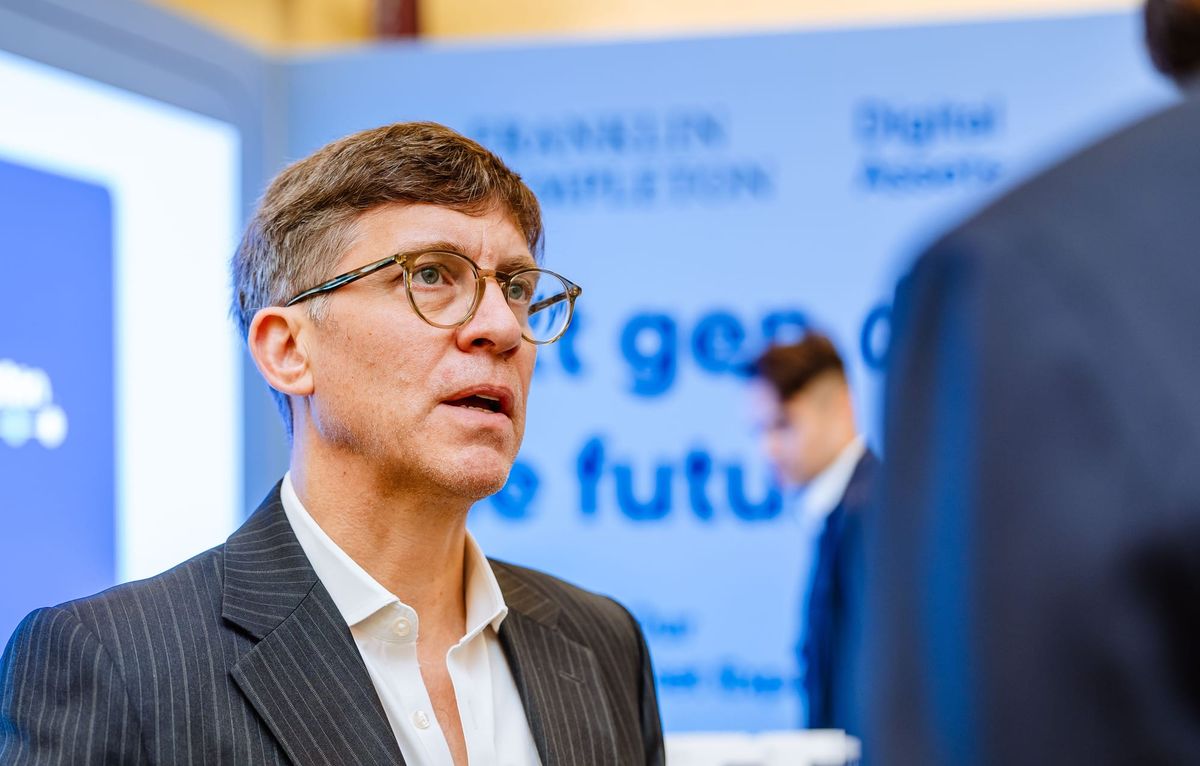
Christopher Perkins, Head of Franklin Crypto (Franklin Templeton) explains why institutions are embracing digital assets, how tokenized money market funds can serve as 24/7 collateral, and why tokenized stocks may be the next step in market evolution.
Christopher, please tell us: why Franklin Crypto, and why now?
It’s such an amazing time in the crypto industry. We’re seeing this transition where the “memes and momentum” era is being replaced with fundamentals and utility. And so now is the time where institutions all over the world—they have more risk for not being in the space. A few years ago, you had a lot of risk for being in crypto. Now, you’re gonna be left behind if you don’t understand the asset class.
Which technologies are now developing?
If you step back, there’s a couple of transformational technologies that are colliding at the same time. Crypto, 24/7 markets, the democratization of finance. Tokenization, which is electronification 2.0. You’ve got AI as well, changing every single business model. And by the way, crypto and AI, they’re friends. They’re complementary. And so as they’re coming together, every institution needs to solve for AI, they need to solve for crypto, and they need to solve for crypto X AI. ’Cause it’s all happening. So, I can’t think of a single serious institution that doesn’t have a dedicated plan around crypto and digital assets.
What did Benji teach the Franklin Templeton team that you didn’t know before the launch?
Benji is such an amazingly engineered product. Prior to being at Franklin, we knew about it, and as I came here and learned about it under the hood, it’s brilliantly engineered.
Have launch or announcement to make? Contact The Next Vertical.
Think about a stablecoin. Stablecoin is a wonderful product. You give me a dollar, or a euro, but mostly dollars today. I take that, I give you a token back. You can move it around 24/7, but you don’t get the interest. The interest goes to somebody else.
When you look at a money market fund that you tokenize, it changes the equation. If you hold it, you benefit from the interest. Because it’s tokenized, you can move it 24/7—major unlock—and you can use it as a really interesting collateral asset.
You are saying “lower collateral, lower risk” is possible. Could you please explain.
My background was in derivatives. After the crisis, we helped design how we collateralize these things. And people don’t understand the magnitude of this innovation, but tokenization—whether it’s money market fund or otherwise—unlocks something that I’ve never seen before in my entire career.
You can actually lower the collateral and lower the risk. Why? How does that make sense, right? It doesn’t make sense. It doesn’t make sense, no. And here’s why.
Back in the day, when we designed market structure, markets would close for three-day weekends. So what did we have to do? We had to add three days of collateral—hope and pray for the best, and just put a big pot of collateral, stagnant collateral, to just hope that we would have enough during a three-day weekend.
Lower risk, lower collateral. Never happens. You can do this.
When we talk about tokenization, RWAs—do you see a lot of liquidity in the market right now?
Tokens are better products. I’m a fiduciary. I run funds. If I were given the choice to trade a token or a legacy asset, if there’s enough liquidity in both—similar liquidity—as a fiduciary, I have to trade the token. I have to be able to risk manage my position. The token allows me to risk manage. The fiat asset is asleep on the weekends and holidays. I can’t. I need to use the token.
But we’re not there yet. You know, I think 0.1% of these assets, and these are big markets. Equity market is $160 trillion in market cap.
Because once you have that sufficient liquidity, like I said, you have to transact in a tokenized asset. You don’t have a choice, because it’s a 24-hour asset. I hate to break it to people, but 24/7 markets are here. They’ve arrived, and so you don’t wanna be that institution who can’t keep up.
That’s the accelerant.
Talking about 24/7 markets, what’s your perspective on tokenized stock? More and more companies are introducing that.
Like I said, very early in its adoption right now. But it’s inevitable. I see it as electronification 2.0.
If you know the history—and you know I’m an old derivatives guy, so I’ll give you a story related to derivatives—there used to be a product, there still is a product, called the Bund Future. Bund Future was traded on the Liffe exchange, and it was open outcry. Big tall guys, much taller than me, would argue and fight over those bid offers in pits. Very manual.
Deutsche Börse, Eurex, built electronification—electronic markets—behind the scenes.
And I think it’s a great paradigm through which you should think about building your products. When AI looks at it, how do we compete? Because AI’s gonna figure it out really quick. So you need to have that edge.