Newsletter: Week 19-23 October

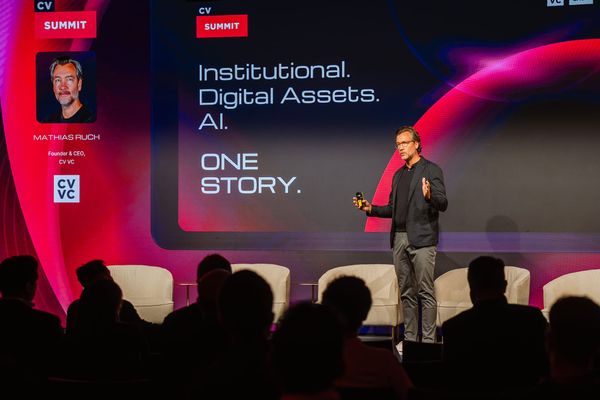
This week's feature: Mathias Ruch, Founder and CEO of CV VC and CV Labs: “If you’re not building with AI, you have a disadvantage right now”
The Big Picture
Agentic AI is starting to affect how financial institutions handle technology, account access, payments and costs. The emerging constraint is not model capability alone. As agents gain the ability to access accounts and make payments, identity, authorization, auditability, resilience and accountability become conditions for deployment at scale.
Five Signals That Matter
1. Critical PHP flaws triggered a global patching race
Two critical PHP vulnerabilities, known as PHP2Shell (CVE-2026-109618 and CVE-2026-109619), leaked on 20 October and were patched on 21 October. Cloudflare deployed WAF protections about nine hours before public disclosure and reported exploitation attempts before patches were released. AI helped discover the flaws, but there is no verified evidence that AI accelerated the exploitation itself.
Why it matters: Patching speed, credential hygiene and incident response are becoming operating-model requirements.
2. Major US financial firms are restricting third-party AI agents
JPMorgan, Citi and Schwab restrict unauthorized agents that access accounts using customer credentials, while Bank of America has also limited agent access. Policies differ in scope: Citi, for example, allows limited read-only access through certain open-banking providers. Wells Fargo's agreement, effective 24 November 2026, takes a contractual approach, assigning customers responsibility for certain agent actions, subject to applicable law.
Why it matters: Incumbents are setting de facto rules for agent access before identity standards mature.
3. Mastercard opened early access to Agent Pay for Machines
On 20 October, Mastercard opened early access to a product that lets AI agents pay for digital services within approved budgets and permissions, following pilots with Cloudflare, Ant International, AIsa, Base, BVNK, Coinbase and Hype. It remains in a pilot and early-access phase rather than being generally commercially available.
Why it matters: Authorization, spending limits and accountability remain central design problems for machine buyers.
4. Barclays plans about 5,000 job cuts in a technology-led efficiency drive
Announced on 22 October, the planned reductions amount to roughly 5% of headcount. About 60% affect support functions, including developers, and around 1,000 positions had already been eliminated in the first half. The cuts form part of a broader cost-reduction program involving greater use of technology and AI.
Why it matters: Technology-enabled productivity is becoming a cost and organizational-design decision.
5. Standard Chartered agreed to acquire Zodia Custody
On 21 October, Standard Chartered signed definitive agreements to acquire 100% of Zodia Custody Limited, subject to regulatory approvals and customary closing conditions. The regulated custody business will be integrated into the bank's Securities Services activities, while the software and professional-services business will be separated into Zodia Solutions, an independent entity under SC Ventures.
Why it matters: Digital-asset custody is moving toward the core of institutional banking.