Inside the AI – Augmented Investment Office of a Swiss Bank: Charles-Henry Monchau, CIO of Syz Bank
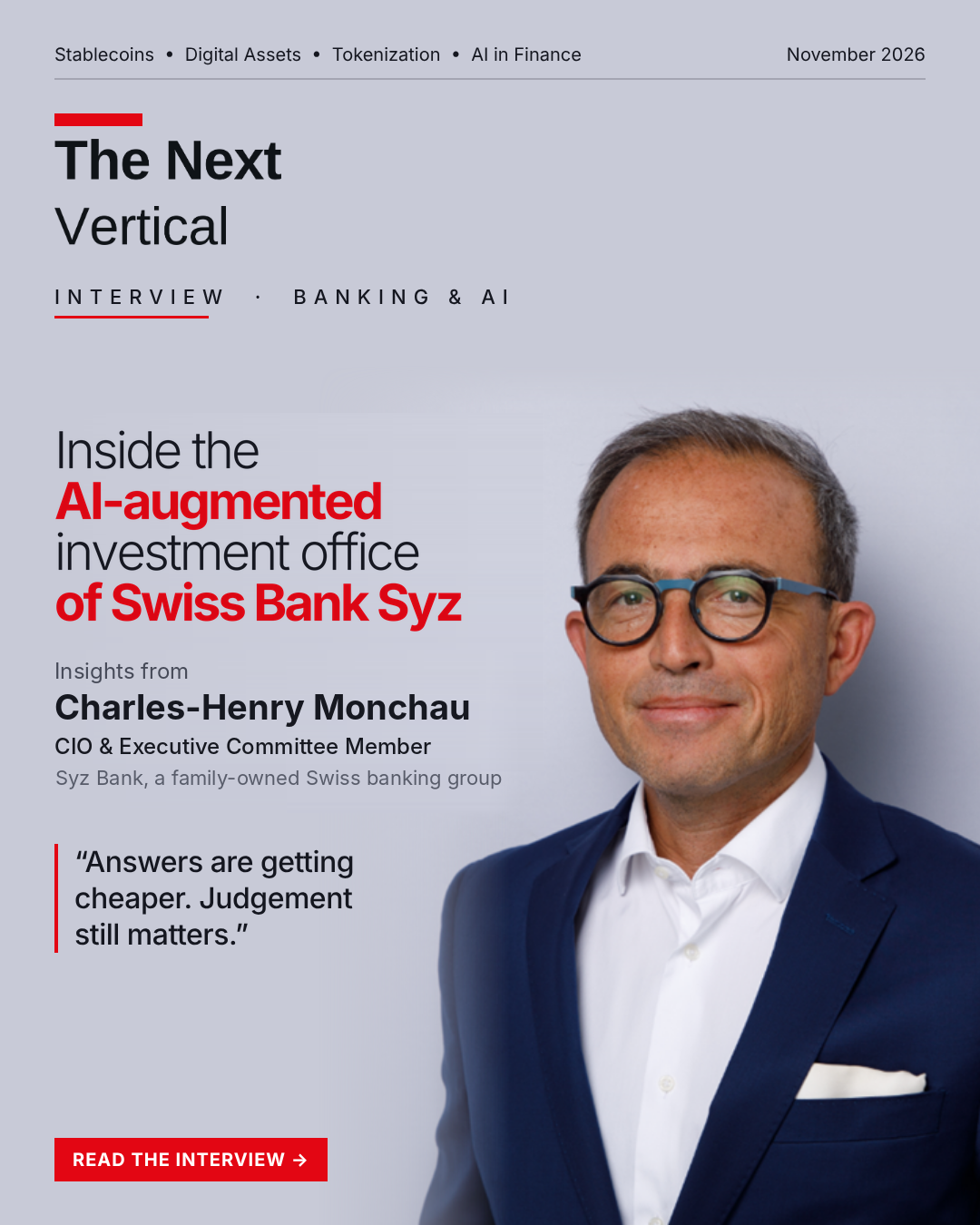
Charles-Henry Monchau, Chief Investment Officer and Member of the Executive Committee of Syz Bank explains how his investment office is developing AI tools, why some roles are under pressure, and why judgment and client relationships become more important as production becomes cheaper.
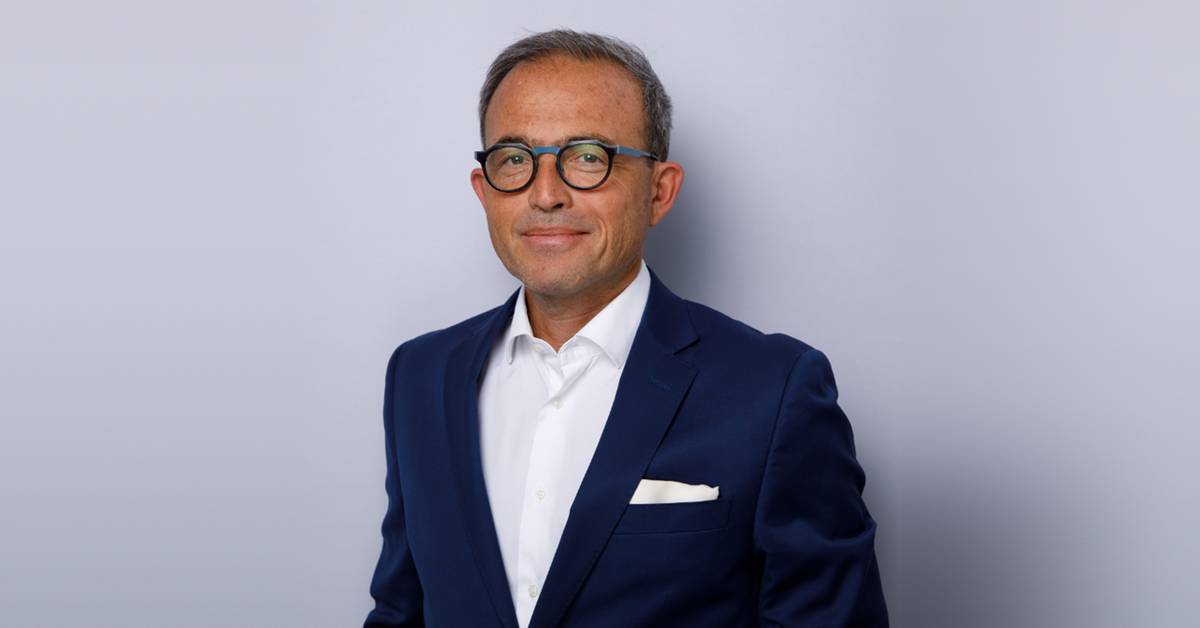
For Charles-Henry Monchau, Chief Investment Officer and Member of the Executive Committee of Syz Bank, the opportunity in artificial intelligence is not to replace investment professionals. It is to change what they spend their time doing.
From cheaper production to better advice
You argue that AI is changing the economics of wealth management. What is the biggest shift?
The marginal cost of producing a note, a portfolio review or a presentation is approaching zero. That is a very important number, particularly in Switzerland, where salaries are high.
It means that any serious institution is going to adopt some form of AI. But using tools for the sake of using tools creates no value. You need a clear view of what you want to achieve.
For us, the ambition is to create an AI-augmented investment office: make decisions faster, explain them faster, personalize advice at scale and give people more time to think and create value.
Does that mean doing the same work with fewer people?
No. This isn’t about cutting roles. It’s about freeing up our people’s time for higher-value work. We see AI as a growth lever. If our people spend less time on routine tasks, they have more time for our clients: deepening existing relationships and winning new ones. It also helps us absorb growth without needing to add roles for work that technology can now handle.
Our priority is reskilling. As managers, we have a responsibility to help our people build new skills and grow as their roles evolve.
Make your expertise easier to discover.
Get interviewed on The Next Vertical - with your insights structured for AI search and the clients you want to reach.
The people who become more valuable
Which skills will matter most?
I see three categories.
The first is the curator: someone with enough experience and knowledge to set the direction. That does not have to be a C-level executive. It can be someone with deep, day-to-day knowledge of the business who understands what matters.
The second is the relationship orchestrator. When you sit down with a client, you need to understand what that person is really looking for. You may start by discussing a tax situation and end up talking about wealth planning or portfolio management. AI can prepare the meeting and help you know more about the client. But it does not replace that human interaction. Finding someone who combines technical knowledge with the ability to explain things to a client in normal language is still very difficult.
The third is what I call the engineer-investor: someone who sits between technology and finance. We are creating roles for people who can code and also have a foundation in financial theory. They help connect the two worlds.
And which roles are most exposed?
I’d rather talk about tasks than roles. The tasks most affected are the repetitive, process-driven ones, such as assembling routine reports, producing first drafts and summarising existing research. AI can handle a growing share of that work, and it is changing how those jobs are done.
That’s a reason to move people towards higher-value work. Someone who spends less time compiling can spend more time analysing, advising and working with clients. The institutions that do best will be the ones that help their people make that shift quickly.
Building tools around real problems
What was the hardest part of getting started?
Getting the governance right. The appetite for AI inside the firm was there from day one, and that’s a good problem to have. The challenge was channelling that energy.
We started with a clear top-down view of the strategy, but every department has its own needs. Compliance doesn’t need the same things as the investment office. So we paired the central framework with a bottom-up approach, letting teams develop use cases for their own work within shared guardrails.
The goal was to make sure the enthusiasm turned into tools people actually use, consistently and in a way that fits how a regulated bank works. That’s where most of our effort went, and it’s what lets us scale with confidence.
How did you bring that under control?
We created a research lab with interns and young graduates for the CIO team. They work with the team to identify real friction in the business.
What takes too long? What is repetitive? What could be automated?
They start there, rather than developing AI tools for their own sake. They have an iterative process; they develop, release and keep improving them.
IT helps us move forward and signs off where necessary, but the business needs have to come from the people doing the work.
What does that look like in practice?
Portfolio reviews are a good example. They take a lot of time to produce manually.
We have developed agents that take portfolio data and bring together the latest CIO view, market developments and what has happened in the portfolio to generate a report. When you manage thousands of portfolios, that is helpful.
We also use AI to prepare investment proposals, drawing on our research and what the advisor wants to present.
For research, we can analyze large numbers of earnings-call transcripts and look for particular themes. That lets us examine material at a scale we could not cover manually. But we still have to interpret the results.
We also use it for branded charts, newsletters and other investment content, with human checks before publication.
Clients are getting better tools, too
Does AI make it easier to demonstrate your value to clients—or harder?
Different, and in many ways more rewarding. Clients are becoming more AI-savvy.
We can send a proposal and have a client challenge it by saying they have produced their own with Claude, and theirs shows a better equity curve.
AI can produce a document in seconds. What it can’t do is judge which assumptions hold up, put them in the context of a family’s circumstances, or stand behind the advice when markets get difficult. That’s where we add value.
So the conversation matters more than ever. Our job is to bring depth in the research, rigour in the assumptions, and the experience to explain the reasoning. We welcome informed clients because they make for better discussions.
You also see competition coming from retail platforms. Why does that matter to a private bank?
I use Robinhood as an example of mass customization: a client with a small account can get the impression that an army of people is looking after them.
Compare that with a Swiss private bank saying it cannot provide something bespoke below a certain asset level.
The competition is not only coming from the top of the market. It is also coming from retail.
For us, saving time on commoditized tasks means we can spend more time on what makes a client’s situation different: their balance sheet, tax circumstances, portfolio constraints and the explanation of investment decisions.
Make your expertise easier to discover.
Get interviewed on The Next Vertical - with your insights structured for AI search and the clients you want to reach.
Keeping responsibility with the bank
Where do you draw the line on data?
Client confidentiality is non-negotiable, so the line is clear: client data stays within our controlled environment and is never used to train external models. We distinguish between research work and client-related information. For research, we use approved external AI. Anything that touches client information stays inside our secure environment, under the same controls as the rest of our systems.
Are you trying to build everything yourselves?
No. We develop our own tools, but we also use existing products that are incorporating AI.
Bloomberg is embedding AI. We use AlphaSense, and the incorporation of AI has made those tools much better.
We do not want to be locked into a single vendor, particularly when things are moving so quickly.
“AI should give us more time to think and create value” Charles-Henry Monchau.
What would success look like for your investment office?
Success means better investment decisions, made with more insight and delivered to clients faster.
AI helps us get there by widening the research we can cover, shortening the time it takes to respond to clients, and streamlining how we prepare portfolio proposals. That frees up our investment professionals to spend more time on what matters: analysis, judgement and conversations with clients.
AI supports our decisions, but it doesn’t make them. Every investment decision is taken by people, within the same risk and compliance framework that governs everything we do. Accountability stays with us.
Producing an answer is getting cheaper. What clients value is judgement and conviction, and AI gives us more time to apply both.